


Is a Meghalaya Tour Worth It for Mumbai People? Honest Take
Published by Shouvik - Founder, Travelxploria | Tour And Travel Expert on Fri Sep 04 2026
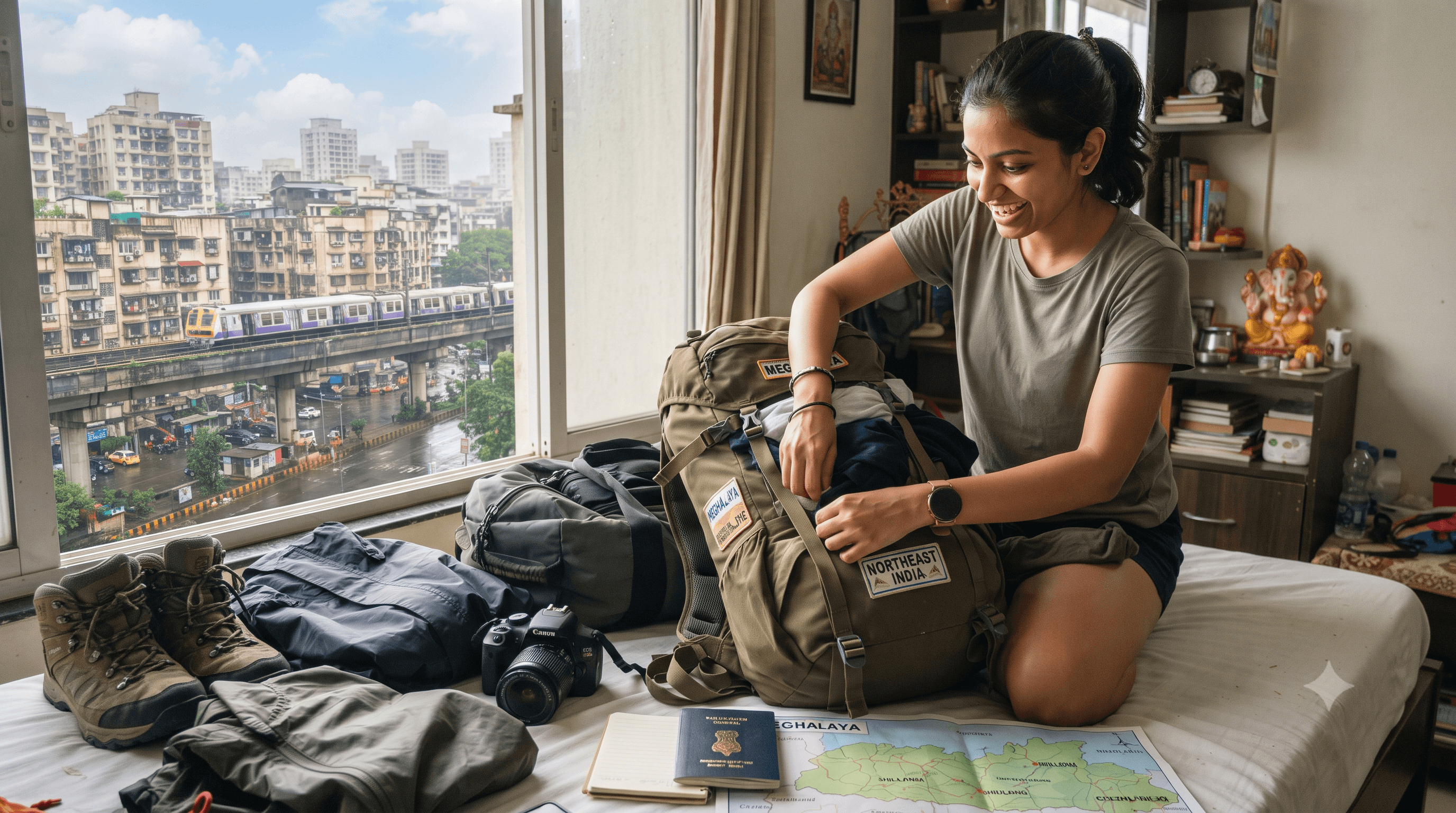
Mumbai gets around 2,200 mm of rain a year and complains about it for four months.
Mawsynram, a village in Meghalaya, gets nearly 11,900 mm and built bridges out of tree roots so people could cross rivers during it. That is more than five times your annual rainfall, in a place that treats it as normal.
So here is the odd pitch. Meghalaya is a monsoon state, and you are from the most monsoon-obsessed city in India. Is it worth flying 2,000 km east to see rain done properly? Or is it a wasted leave?
The short answer
Yes, for most Mumbai couples, friend groups, and families with kids above 8 or so. Two conditions.
Give it at least five days, and go between October and March. Do that and you get waterfalls at full volume, a river so clear the boats look like they are floating on air, and hill towns where the evening temperature drops to 10 degrees while Mumbai is sitting at 30. Get the timing wrong and you will see fog, closed trails, and a brown river.
The rest of this article is about getting it right.
Why Meghalaya lands differently when you are from Mumbai
Every Mumbaikar has a complicated relationship with rain. You have waded through it, cursed it, and watched it flood the tracks at Kurla. You know monsoon as a problem.
Meghalaya flips that. Here the rain is the reason the place exists. The waterfalls at Cherrapunji, the moss on every stone, the caves, the root bridges. All of it is rain, turned into scenery. Nohkalikai Falls drops roughly 340 meters off a cliff, which makes it the tallest plunge waterfall in the country, and you can hear it before you see it.
Then there is the living root bridge. The Khasi people train the aerial roots of rubber fig trees across streams over 15 to 25 years until they can hold 50 people. There are about 100 of them across 70 odd villages, and India has nominated the whole landscape for UNESCO World Heritage status in the 2026 to 27 cycle. Nothing in Maharashtra, or anywhere else in India, looks like this.
And the part Mumbai people mention most after they come back: it is quiet. Shillong has cafes and live music but shuts by 9 pm. Mawlynnong, which Discover India magazine once called the cleanest village in Asia, has a total of maybe 500 people. After a year of Andheri, the silence is a physical sensation.
How do you get there from Mumbai?
Meghalaya has no direct flight from Mumbai. That is the first thing to accept.
The route is Mumbai (BOM) to Guwahati (GAU), which is a non stop flight of roughly 2 hours 50 minutes to 3 hours 20 minutes depending on the airline. IndiGo, Air India, and Akasa fly it, with fares usually in the ₹7,000 to ₹9,000 range one way if you book a month out. From Guwahati airport, Shillong is about 100 km and 2.5 to 3.5 hours by road, depending on traffic near the airport and how many times you stop at Umiam Lake for photos.
Shillong does have its own airport at Umroi, but flights are limited and none come from Mumbai, so ignore it for planning.
The tip that saves a day: take the earliest Mumbai departure, land by 9 or 10 am, and you are in Shillong by lunch. A 2 pm flight puts you on a dark hill road after sunset and turns Day 1 into a write off.
If you want the airport to hotel part handled, the Shillong, Cherrapunji and Mawlynnong tour starts with the Guwahati pickup, which matters more here than in most places because Guwahati taxi negotiation at 10 am is not a great start to a holiday.
When should a Mumbaikar go? (month by month)
October to November: best window, no contest. Monsoon has just ended, so every waterfall is still full, but the skies have cleared. The Umngot river at Dawki turns glass clear from November. And Shillong's Cherry Blossom Festival runs in mid November, with pink trees lining the roads. Diwali holidays line up. Book early.
December to February: dry and cold. Waterfalls are thinner but still running, Dawki is at its clearest, trails are dry, and nights in Shillong drop to 4 or 5 degrees. If you want the double decker root bridge trek, this is the safest time for it. Mumbai winter is 18 degrees at best, so pack real warm clothes.
March to May: warm and green. Pre monsoon showers start in April, which is annoying, but the hills are green again and crowds are thin. Reasonable value window. Not the best photos.
June to September: for the rain chasers only. If you specifically want to see the wettest place on earth doing its thing, this is it, and it is a spectacle. But the root bridge trails become dangerous, Dawki turns muddy, and fog hides the valleys half the day. We book a few Mumbai guests in this window every year. Most come back happy. All of them came knowing what they signed up for.
Which Meghalaya trip fits your holiday length?
3 to 4 days: Shillong only
Umiam Lake, Elephant Falls, Shillong Peak, Laitlum Canyon, Police Bazar, a cafe or two. It is a good long weekend, and the weekend getaway to Shillong package is built for exactly this. You will not see Cherrapunji or the root bridges though, and you will fly home knowing you missed the main event. If this is your only option, take it. If you can stretch to five days, stretch.
5 to 6 days: Shillong plus Cherrapunji plus Dawki
This is the trip. Two nights Shillong, two nights Cherrapunji (Sohra), a day trip to Dawki and Mawlynnong, fly out of Guwahati. You get the falls, the caves, the root bridges, the boat on the Umngot, and the cleanest village in Asia. For couples and friend groups, the Wonderful Shillong tour covers this loop without the rushed feel.
7 to 8 days: add Kaziranga
With a full week, drive back into Assam and add two nights at Kaziranga National Park. One horned rhinos, elephant safaris, and a completely different landscape from the Khasi hills. For families with kids, the Shillong Kaziranga family package is the one we recommend, because the safari is the thing kids talk about for months. Note that Kaziranga usually closes from May to around October for the monsoon, so this combination works best from November to April.
Who should NOT book this trip
Nobody else puts this in a travel article, so here it is.
- If knees are a problem. The double decker root bridge at Nongriat is around 3,500 steps down and 3,500 back up. There is no shortcut. Elderly parents and anyone with knee or back issues should see the single decker bridge near Riwai instead, which is a 10 minute walk. Plan for this before you book, not at the trailhead.
- If you want nightlife. Shillong closes early. Cherrapunji closes earlier. If your idea of a holiday is Goa after dark, this is not it.
- If you are a strict vegetarian and fussy about it. Khasi food leans hard on pork and smoked meat. You will find vegetarian food everywhere, and Shillong has plenty of Bengali, Punjabi, and South Indian restaurants, but Cherrapunji homestays have limited menus. Tell your tour planner in advance and it is a non issue.
- If you have fewer than 4 days. Guwahati transit eats half a day each side. A 3 day trip is two travel days and one Shillong day.
- If you want a pool and room service. Meghalaya is a walking, driving, climbing holiday. Kerala is better for sitting still.
Things Mumbai people get wrong about Meghalaya
A short list, from experience.
- Packing for Lonavala. Shillong in December is 4 degrees at night. Cherrapunji is windy and wet even in the dry season. Bring a real jacket, a rain shell, and shoes that grip wet stone. Not floaters. Not white sneakers.
- Skipping Dawki because it is "just a river." It is the most photographed spot in the state for a reason. Go early, before 9 am, when the water is stillest.
- Booking Cherrapunji for one night. The root bridge trek alone takes 6 to 7 hours round trip. One night means you see the falls and skip the bridge. Two nights minimum.
- Assuming the monsoon is like Mumbai's. Mumbai rain comes in bursts. Cherrapunji rain in July can go on for three days straight. Different animal.
- Not carrying cash. Card machines exist in Shillong. Beyond it, especially in the villages, cash is what works.
What does it cost from Mumbai?
Rough numbers so you can budget.
Return flights Mumbai to Guwahati run about ₹15,000 to ₹18,000 per person if you book 4 to 6 weeks out, more around Diwali and Christmas. Land packages covering hotels, a private vehicle, and sightseeing for a 3 to 5 day budget itinerary start around ₹9,000 to ₹11,000 per person and climb with better resorts in Cherrapunji and the Kaziranga extension. Boat rides at Dawki, root bridge entry, and meals outside breakfast are usually extra.
So a couple on a 6 day Shillong, Cherrapunji, Dawki trip is looking at roughly ₹55,000 to ₹75,000 all in. A family of four on the Kaziranga version sits closer to ₹1.3 to ₹1.6 lakh. About what a Kerala week costs now, and nothing in Kerala looks like a root bridge.
Final word
Is Meghalaya recommended for Mumbai people? Yes, if you give it five days and go between October and March.
It is the one place in India where the thing you have spent your life complaining about becomes the thing you flew to see. Waterfalls, clear rivers, clouds sitting in the valley, and a silence Mumbai cannot sell you at any price.
Pick October if you want the falls at full power. Pick January if you want the trek and the clearest water. Either way, book the early flight.
Which one are you: waterfalls in October or the trek in January? Tell us in the comments and we will tell you what to pack.
Written by Shouvik, Founder, Travelxploria. Shouvik has been planning Northeast, Himalayan, and international holidays for Indian families since founding Travelxploria (a unit of Explorer Club Holidays) and writes about the practical side of travel: routes, timing, and what actually goes wrong on the road.